Wound Ostomy Certification Prep Courses
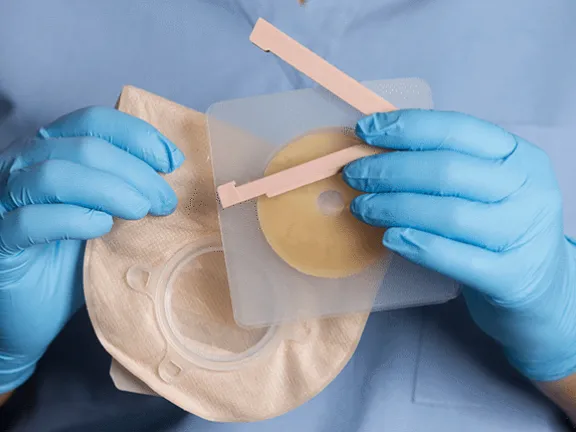
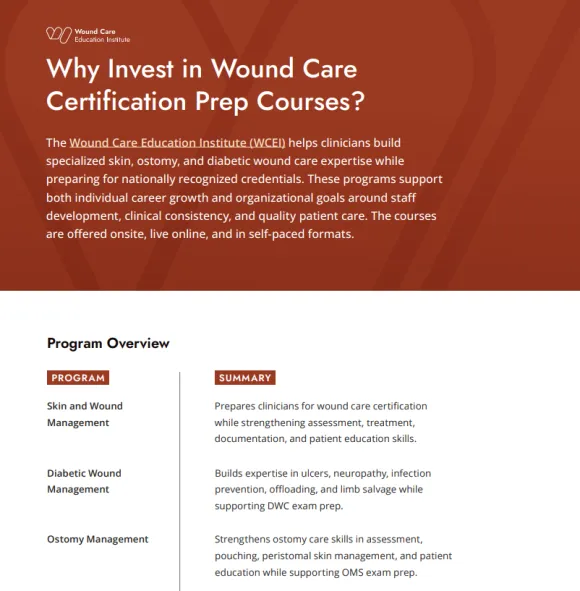
Our ostomy management courses help healthcare professionals build practical skills in stoma care, ostomy assessment, patient education, pouching systems, peristomal skin management, and support for people with fecal or urinary diversions. The courses are designed to help eligible learners prepare for the NAWCO Ostomy Management Specialist (OMS) certification exam.
Practical, flexible, industry-leading wound care education from WCEI
Industry recognition
Experienced instructors
Study support tools
Earn contact hours
About OMS Courses
- Best for: Nurses and other licensed healthcare professionals that provide ostomy care.
- Credential focus: Ostomy Management Specialist (OMS)
- Course format options: Online, live online, onsite, refresher, and recertification.

Looking to train your team?
Let WCEI customize a Ostomy Management course for your team. With a minimum of 10 students, courses can be taken live in the classroom or online.
We can offer a special tuition rate if you have a smaller group of two or more. Students can participate in one of our public Ostomy Management course or the online course.

Skin & wound management vs. ostomy management: which course is right for you?
The Skin and Wound Management and Ostomy Management certification preparation courses are related but distinct learning paths. Skin and Wound Management courses focus on skin and wound assessment, prevention, treatment strategies, and documentation. Ostomy Management courses focus on stoma care, fecal and urinary diversions, pouching systems, peristomal skin management, patient education, and support before and after ostomy surgery. Clinicians who care for both wounds and ostomies may benefit from completing both pathways.

How WCEI Supports Your Path to Certification
1. Choose your pathway
Select the program that aligns with your professional goals. WCEI offers specialized training in areas such as Wound Care, Diabetic Wound Care, Ostomy Management, and Wound Care Marketing.
2. Pick your format
Learn your way with onsite, live online (4-day instructor-led), or self-paced online courses (up to 180 days access).
3. Review eligibility requirements
Before enrolling, confirm the eligibility criteria for your desired credential (WCC®, DWC®, OMS®, or CWCMS®), including licensure and experience if applicable.
4. Complete your coursework
Work through course content, activities, and assessments designed for real-world application.
5. Receive your certificate of completion
After finishing your course and assessments, you’ll be able to download your WCEI certificate of completion.
6. Take your certification exam
Apply for and complete your certification exam through the appropriate credentialing body, either NAWCO or ABWM, depending on your selected credential.
7. Stay certified
Maintain your credential with flexible recertification options from WCEI.
Employer Tuition Reimbursement
Our free and simple toolkit can help you put together a formal request approval from a manager to get reimbursed for your WCEI courses. Our free toolkit gives you an email template, draft reimbursement letter, and value justification sheet.
Student testimonials
-
It means a lot for me to have that credential behind my name. It means that physicians and other nurses see me as an expert. I'm now a go-to person when it comes to all things wounds.
Missy W, RN, WCC, OMS, Wound Program Director -
The credentials are important to me because it means that I've have earned the respect of my peers and the doctors. It has also increased my pay.
Judy G, LPN, WCC, CWCA, OMS -
I would absolutely recommend taking the wound care certification course. I thought I knew what I was doing before the course, but after, I'm more confident and can just build on those skills. I don’t think anybody should be doing wound care without the certification. It just adds so much to your knowledge and confidence by knowing what you’re doing to treat wounds. And since my colleague and both I got certified, our wound care rates are through the roof — they’re just amazing!
Tara S, FNP, WCC, Carroll County Memorial Hospital

Frequently Asked Questions
What is an Ostomy Management Specialist?
An Ostomy Management Specialist is a healthcare professional with specialized knowledge in ostomy and stoma care. This may include supporting patients with colostomies, ileostomies, urostomies, or other fecal or urinary diversions.
Who should take an ostomy certification course?
An ostomy certification course may be helpful for nurses and other healthcare professionals who regularly care for patients with ostomies or urinary and fecal diversions. This can include clinicians working in wound care, acute care, post-acute care, home health, long-term care, outpatient clinics, rehabilitation, or surgical recovery settings.
Can I take ostomy certification training online?
Yes, we offer an online Ostomy Management Specialist course for learners who need a flexible, self-paced course option.
How many contact hours are available for the Ostomy Management Specialist course?
Our Ostomy Management Specialist courses offer up to 36 contact hours, depending on the course format and learner discipline.
Is this course only for nurses?
No, ostomy management education is relevant for both nurses and other licensed healthcare professionals involved in ostomy care, consultation, rehabilitation, or patient education. Eligibility for certification depends on the credentialing board’s requirements, so learners should confirm whether their role qualifies.