Calcium Alginate Dressings: What Wound Care Nurses Need to Know
This article was reviewed by Tara Call Triplett, RN, WCC, CHFN
Calcium alginate dressings are a cornerstone in treating moderate to heavily exudating wounds. Derived from brown seaweed, these dressings offer unique properties that facilitate optimal wound healing. For wound care nurses, understanding the functionality, appropriate usage, and application techniques of calcium alginate dressings is essential for effective patient care.
What are calcium alginate dressings?
Calcium alginate dressings are composed of calcium and sodium salts of alginic acid, a polysaccharide extracted from brown seaweed. When in contact with wound exudate, these dressings undergo an ion exchange, replacing calcium ions with sodium ions from the fluid. This reaction converts the dry fibers into a hydrophilic gel that conforms to the wound bed, thereby maintaining a moist environment.
Functions of calcium alginate dressings
The primary functions of calcium alginate dressings include:
- High absorbency: They can absorb a lot of fluid (around 15 to 20 times their weight), making them ideal for wounds with significant drainage.
- Moist wound environment: The gel formation maintains moisture, promoting cellular activities essential for tissue regeneration.
- Autolytic debridement: The moist wound environment works with the body's natural process of necrotic tissue removal.
- Hemostatic properties: The calcium content can aid in blood clotting, beneficial for bleeding wounds.
When to use calcium alginate dressings
Calcium alginate dressings are suitable for various wound types, particularly ones experiencing moderate to heavy drainage:
- Pressure ulcers: Effective in managing stage III and IV ulcers with significant drainage.
- Venous leg ulcers: Helps control exudate and promotes healing in chronic venous insufficiency wounds.
- Diabetic foot ulcers: Manages exudate and supports a moist environment.
- Surgical wounds: Post-operative wounds with drainage benefit from their absorbent properties.
- Traumatic wounds: Lacerations or abrasions with bleeding and exudate are suitable candidates.
- Superficial and partial thickness burns: Alginate dressings create a moist wound environment, promoting reduced healing time and faster tissue granulation in burn patients.
Contraindications
Calcium alginate dressings are not appropriate for:
- Dry or minimally exudating wounds: There is a risk of desiccating the wound bed.
- Third-degree burns: Not suitable due to the severity and depth of tissue damage. Third degree burns typically have some measure of dry eschar. Using an alginate dressing will further dry out the wound bed, causing increased tissue necrosis.
- Wounds with exposed bone or tendon: Alginates are for significant drainage management of wounds, not deep tissue protection. Their use on support structures will dry these tissues instead of protecting them. Use on support structures increases the risk of tissue necrosis.
- Patients with known sensitivity to alginate: To prevent allergic reactions.
- Surgical implantation: Alginate dressings aren’t designed for internal use.
Application guidelines
Preparation:
- Wound cleansing: Gently cleanse the wound with a sterile saline solution or appropriate cleanser product.
- Periwound protection: Ensure the surrounding skin is dry to prevent maceration.
Dressing application:
- Select the appropriate size: Choose a dressing that extends only minimally beyond the wound margins to ensure full coverage and prevent periwound maceration
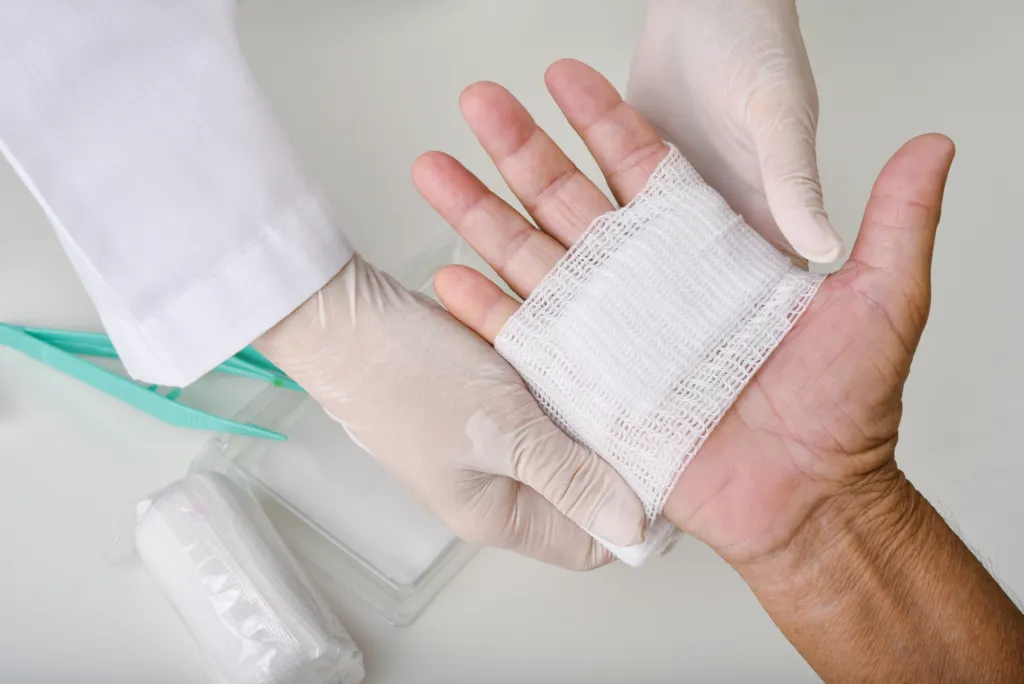
- Apply dressing: Place the calcium alginate dressing directly on the wound bed. For deeper wounds, loosely pack the dressing into the space without overfilling it. Always leave a portion of the dressing extending from the cavity wound to allow for easy and complete removal.
- Secondary dressing: Cover with appropriate secondary dressing (e.g., gauze pad, adhesive bandage, or foam dressing) to secure the alginate in place and manage additional drainage.
Dressing changes:
- Frequency depends on exudate levels. Typically, dressings are replaced every five to seven days.
- If the dressing becomes oversaturated or you suspect infection is present, change more frequently.
Removal:
- Gently remove the secondary dressing.
- If the alginate dressing adheres to the wound bed, moisten with saline to facilitate removal and prevent tissue damage. If the dressing frequently adheres to the wound bed, consider changing to an alternate dressing for lower exuding wounds.
Advantages in wound care
Calcium alginate dressings offer several benefits:
- Enhanced patient comfort: Calcium alginate dressings significantly reduced pain severity during dressing changes.
- Reduced dressing frequency: Its high absorbency may extend intervals between dressing changes, thereby improving the patient's quality of life.
- Biodegradability: The gel is biodegradable, minimizing residue in the wound bed.
- Versatility: Available in various forms (sheets, ropes) to accommodate different wound shapes and depths.
- Reduce healing time: Calcium alginate dressings can significantly reduce healing time compared with traditional dressings. They also allow for faster epithelialization and wound size reduction.
Considerations for wound care nurses
- Assessment: Evaluate daily the wound for signs of infection, changes in exudate levels, and healing progress.
- Education: Instruct patients and caregivers on the importance of adhering to dressing change schedules and monitoring for complications.
- Documentation: Accurately record wound characteristics, dressing changes, and patient responses to treatment. Documentation may be confirmed by a drawing or a photograph of the wound, and the patient’s plan of care should also be included. CMS typically does not cover alginate dressings for low-exuding or partial-thickness wounds.
- Interdisciplinary collaboration: Work closely with the healthcare team to adjust treatment plans based on wound progression.
References
- BMC Surgery. (May 2025). Evaluating the therapeutic efficacy and safety of alginate-based dressings in burn wound and donor site wound management associated with burn surgery: A systematic review and meta-analysis of contemporary randomized controlled trials. Retrieved from https://bmcsurg.biomedcentral.com/articles/10.1186/s12893-025-02956-z
- Centers for Medicare and Medicaid Services. (n.d.). Local Coverage Determination: Wound Care. Retrieved from https://www.cms.gov/medicare-coverage-database/view/lcd.aspx?LCDId=37166
- The Wound Pros. (n.d.). Calcium Alginate Dressings: Uses and Applications. Retrieved from https://www.thewoundpros.com/post/calcium-alginate-dressings-uses-and-applications
- The Wound Pros. (n.d.). Alginate Dressing 101: What You Need to Know. Retrieved from https://www.thewoundpros.com/post/alginate-dressing-101-what-you-need-to-know
- WoundSource. (n.d.). What Is an Alginate Dressing? Retrieved from https://www.woundsource.com/blog/what-alginate-dressing