Onsite Skin + Wound Care Management
Prepare for the wound care certification exam with our four-day, onsite course.
Advance Your Skills, Improve Their Lives
There are many processes involved in successful wound healing. And certified wound care clinicians play an integral role in all of them.
This onsite Skin + Wound Management course prepares you for the Wound Care Certified (WCC) exam and offers the evidence-based approach to wound management you need to provide excellent care to those who need it most.
Curriculum covers wound assessment, treatment strategies, infection prevention techniques, and more.
Onsite classroom learning
- Procedure demonstration videos guide learners step-by-step.
- Access materials used by instructors during classes.
- Engaging case studies and interactive exercises strengthen retention and build real-world skills.
- Knowledge checks after each section, plus two optional practice tests to prepare for final exam.
- There are two prerequisites requiring two hours of work in total.
Certification exam
If you intend to take the certification exam, a minimum of two years of full-time or four years of part-time wound care experience is required to be successful.
After registering for our course, select a credentialing board, complete their exam application, and pay their certification fees. The credentialing board determines your exam eligibility.
NAWCO and the ABWM administers its certification exams at PSI Testing Centers throughout the U.S.
Contact
Contact NAWCO or ABWM for exam-related questions.
- NAWCO: 877-922-6292
- ABWM: 202-457-8408
Success commitment
We're here to help you succeed! If you don’t pass your credentialing exam after completing one of our courses, we'll provide you with six months of free access to the online Skin + Wound Management course. Email a copy of your exam results within 30 days of receiving them to coursesupport@relias.com.
Credits
| Nurses | 29.25 Contact hours |
| Physical Therapists | 29.25 Contact hours |
| Dietitians | 29.25 CPEUs |
| Physicians | 29.25 AMA PRA Category 1 credits |
Important accreditations notice for Occupational Therapists:
This course is not accredited for Continuing Education (CE) credit for Occupational Therapists. However, a Certificate of Completion will be issued upon successful completion of the course. This certificate may be submitted as documentation to fulfill eligibility requirements for the NAWCO certification examination, in accordance with their current standards.
Physician Continuing Education Credit
Relias LLC, WCEI's parent company, designates this enduring activity for a maximum of 29.25 AMA PRA category 1 credits. Physicians should only claim credit commensurate with the extent of their participation in the activity.
To request a CME credit certificate after you have completed the online evaluation, please email coursesupport@relias.com or call 877-462-9234.
Accreditation Information
In support of improving patient care, Relias LLC is jointly accredited by the Accreditation Council for Continuing Medical Education (ACCME), the Accreditation Council for Pharmacy Education (ACPE), and the American Nurses Credentialing Center (ANCC), to provide continuing education for the healthcare team.
As a Jointly Accredited organization, Relias LLC is accredited to offer dietetic continuing education by the Commission on Dietetic Registration (CDR). The CDR is an associate member of Joint Accreditation for Interprofessional Continuing Education.
Completion of this RD/DTR profession-specific or IPCE activity awards CPEUs (1 IPCE credit=1 CPEU).
If the activity is dietetics related by not targeted to RDs or DTRs, CPEUs may be claimed which are commensurate with participation in contact hours (1 hour/60 minutes=1 CPEU).
RDs and DTRs are to select activity type 102 in their Activity logs. Performance Indicator selection is at the learner's discretion.
Relias LLC is a licensed physical therapy continuing Education sponsor (#216.000290) by the Illinois Department of Financial and Professional Regulation. Certificates must be retained by the licensee for a period of five years after course completion. Please check with your state for prior approval.
Tuition Rate
$2,297 Individual Student
Certification Exam Fee: Fees are not included in the tuition rate. You will need to select a credentialing board, complete their exam application and pay exam fees.
For information on hosting a course at your organization, visit our Host a Course page
Included with tuition
- Six-month access to the online course beginning 29 days before the first day of class (platform resource center)
- Contact hours upon completion (visit Certificates tab)
- Digital version WCEI Skin and Wound Management Course handout
- Exam prep tools including end of lesson knowledge questions and optional practice exams
- Pre-exam certification review
Ongoing education
- Nurses: Free one-year Nurse.com Premium membership
- Physical therapists, occupational therapists, or dietitians: Free one-year subscription to Relias Academy
- Physicians: Access to free CMEs on FreeCME.com
Employer Tuition Reimbursement
Our free and simple toolkit can help you put together a formal request approval from a manager to get reimbursed for your WCEI courses. Our free toolkit gives you an email template, draft reimbursement letter, and value justification sheet.
Helpful Links
Schedule
Participants in the Onsite Skin and Wound Management Course must attend this course in its entirety and complete the evaluation form to receive continuing education credits. There are two prerequisites requiring two hours of work in total.
Four-Day Course
| Days 1 - 4 | 9:00 AM - 5:00 PM | Classroom Training |
Curriculum
- Section 1 Skin and Underlying Structures
- Section 2 Principles of Wound Healing
- Section 3 Assessing the Patient
- Section 4 Assessing the Skin
- Section 5 Assessing the Wound
- Section 6 Principles of Wound Management
- Section 7 Preparing the Wound Bed - Tissue Management and Debridement
- Section 8 Preparing the Wound Bed - Infection Prevention and Management
- Section 9 Preparing the Wound Bed - Moisture Balance and Epithelial Edge Advancement
- Section 10 Wound Care - Treatment Basics
- Section 11 Wound Care - Topical Options
- Section 12 Wound Care - Adjunctive Modalities
- Section 13 Assessing the Wound - Pressure Injuries
- Section 14 Wound Care - Pressure Injuries
- Section 15 Assessing the Wound - Lower Extremity Ulcers
- Section 16 Wound Care - Lower Extremity Ulcers
- Section 17 Wound Care - Acute Wounds
- Section 18 Wound Care - Other Wounds
- Section 19 Wound Care - Nutritional Considerations
- Section 20 Wound Care - Pain Management
- Section 21 Wound Care - Palliative Considerations
- Section 22 Wound Care - Pediatric and Neonatal Considerations
- Section 23 Documenting and Monitoring the Wound
- Section 24 Patient, Family, and Team Education
- Section 25 Practice Standards
- Section 26 Assessing the Wound - Time to Practice
Learning Objectives
- Discuss how standards of care, evidence-based practice and a multidisciplinary wound care team can affect clinical choices in wound management.
- Discuss the basic anatomy and physiology of the skin.
- Identify at least five parameters required for accurate wound assessment.
- Identify pressure ulcer stages according to NPUAP guidelines.
- Identify five factors which enhance or impede the wound healing process.
- Explain four types of basic principles of wound bed preparation.
- Identify three major components of a nutritional assessment for optimizing wound healing.
- Identify four different categories for topical wound management.
- Select treatment options based upon wound assessment, etiology and goal of wound care.
- Differentiate arterial, neuropathic and venous ulcers in terms of causative factors, pathophysiology, appearance and principles of management.
- Describe three factors involved in development of a pressure ulcer and interventions to prevent their occurrence.
- Describe at least five interventions that optimize acute surgical wound healing.
- Differentiate between wound etiologies and clinical manifestations of acute and traumatic wounds.
- Differentiate types of burns and principles of management.
- Select treatment options, and differentiate between wound etiologies and clinical manifestations of chronic, malignant and inflammatory wounds.
- Discuss three adjunctive treatment modalities that enhance wound healing.
- Discuss current multidisciplinary care approaches to wound care.
- Discuss components required for accurate wound documentation.
I’m worried about the cost of the course.
Investing in your education is a big decision. That’s why we offer flexible financing options through Affirm and employer reimbursement guidance to help make certification more accessible. Many of our learners have successfully received financial support from their employers — our team can help you build a case for funding. (See this blog)
I don’t have time to take the course.
Your schedule can be demanding, which is why we offer multiple learning formats to fit your needs so you can balance your education with work and life responsibilities. Our on-site and live online courses offer deep learning over four days, while our online self-paced course let’s you learn at your own pace over six months.
Will certification actually help my career?
Studies show that certified nurses are preferred over non-certified nurses for job opportunities and promotions. Many of our alumni have reported salary increases up to 20%, new leadership roles, and greater professional recognition after certification. Additionally, employers highly value wound care, diabetic wound care, or ostomy credentials, as they demonstrate a commitment to excellence in patient care.
Will I really be prepared for the exam?
Absolutely! Our courses are designed to build confidence in both clinical practice and exam success. In fact, 90% of WCEI alumni reported they felt prepared for their certification exam after taking our course, and 97% have successfully earned their certification. Our alumni consistently praise our comprehensive course materials, expert instructors, and interactive study tools as key factors in their success. Plus, if you don’t pass the exam, we stand by you with our Success Commitment — providing six months of free course access so you can continue preparing for the exam and reach your goal.
Do I meet the eligibility requirements?
Each certification has different eligibility requirements, and we’re happy to walk you through them! The good news is that WCEI offers multiple certification pathways, including courses that don’t require a bachelor’s degree. If you’re unsure about your eligibility, contact us — we’ll help you find the best path to certification based on your credentials and experience.
I’m already trained in wound care. Why does certification matter?
Having wound care training is valuable, but certification takes your expertise to the next level—providing professional credibility, career advancement opportunities, and a clear demonstration of your skills and dedication to excellence in wound care to your employer, colleagues, and patients. WCEI education prepares you for NAWCO and ABWM certification—leaders in wound care credentialing in the U.S. So no matter where your career takes you, your certification will be a valuable credential that is nationally recognized and respected, setting you apart in the field of wound care.
Overview
Advance Your Skills, Improve Their Lives
There are many processes involved in successful wound healing. And certified wound care clinicians play an integral role in all of them.
This onsite Skin + Wound Management course prepares you for the Wound Care Certified (WCC) exam and offers the evidence-based approach to wound management you need to provide excellent care to those who need it most.
Curriculum covers wound assessment, treatment strategies, infection prevention techniques, and more.
Onsite classroom learning
- Procedure demonstration videos guide learners step-by-step.
- Access materials used by instructors during classes.
- Engaging case studies and interactive exercises strengthen retention and build real-world skills.
- Knowledge checks after each section, plus two optional practice tests to prepare for final exam.
- There are two prerequisites requiring two hours of work in total.
Certification exam
If you intend to take the certification exam, a minimum of two years of full-time or four years of part-time wound care experience is required to be successful.
After registering for our course, select a credentialing board, complete their exam application, and pay their certification fees. The credentialing board determines your exam eligibility.
NAWCO and the ABWM administers its certification exams at PSI Testing Centers throughout the U.S.
Contact
Contact NAWCO or ABWM for exam-related questions.
- NAWCO: 877-922-6292
- ABWM: 202-457-8408
Success commitment
We're here to help you succeed! If you don’t pass your credentialing exam after completing one of our courses, we'll provide you with six months of free access to the online Skin + Wound Management course. Email a copy of your exam results within 30 days of receiving them to coursesupport@relias.com.
Certificates
Credits
| Nurses | 29.25 Contact hours |
| Physical Therapists | 29.25 Contact hours |
| Dietitians | 29.25 CPEUs |
| Physicians | 29.25 AMA PRA Category 1 credits |
Important accreditations notice for Occupational Therapists:
This course is not accredited for Continuing Education (CE) credit for Occupational Therapists. However, a Certificate of Completion will be issued upon successful completion of the course. This certificate may be submitted as documentation to fulfill eligibility requirements for the NAWCO certification examination, in accordance with their current standards.
Physician Continuing Education Credit
Relias LLC, WCEI's parent company, designates this enduring activity for a maximum of 29.25 AMA PRA category 1 credits. Physicians should only claim credit commensurate with the extent of their participation in the activity.
To request a CME credit certificate after you have completed the online evaluation, please email coursesupport@relias.com or call 877-462-9234.
Accreditation Information
In support of improving patient care, Relias LLC is jointly accredited by the Accreditation Council for Continuing Medical Education (ACCME), the Accreditation Council for Pharmacy Education (ACPE), and the American Nurses Credentialing Center (ANCC), to provide continuing education for the healthcare team.
As a Jointly Accredited organization, Relias LLC is accredited to offer dietetic continuing education by the Commission on Dietetic Registration (CDR). The CDR is an associate member of Joint Accreditation for Interprofessional Continuing Education.
Completion of this RD/DTR profession-specific or IPCE activity awards CPEUs (1 IPCE credit=1 CPEU).
If the activity is dietetics related by not targeted to RDs or DTRs, CPEUs may be claimed which are commensurate with participation in contact hours (1 hour/60 minutes=1 CPEU).
RDs and DTRs are to select activity type 102 in their Activity logs. Performance Indicator selection is at the learner's discretion.
Relias LLC is a licensed physical therapy continuing Education sponsor (#216.000290) by the Illinois Department of Financial and Professional Regulation. Certificates must be retained by the licensee for a period of five years after course completion. Please check with your state for prior approval.
Tuition Cost
Tuition Rate
$2,297 Individual Student
Certification Exam Fee: Fees are not included in the tuition rate. You will need to select a credentialing board, complete their exam application and pay exam fees.
For information on hosting a course at your organization, visit our Host a Course page
Included with tuition
- Six-month access to the online course beginning 29 days before the first day of class (platform resource center)
- Contact hours upon completion (visit Certificates tab)
- Digital version WCEI Skin and Wound Management Course handout
- Exam prep tools including end of lesson knowledge questions and optional practice exams
- Pre-exam certification review
Ongoing education
- Nurses: Free one-year Nurse.com Premium membership
- Physical therapists, occupational therapists, or dietitians: Free one-year subscription to Relias Academy
- Physicians: Access to free CMEs on FreeCME.com
Employer Tuition Reimbursement
Our free and simple toolkit can help you put together a formal request approval from a manager to get reimbursed for your WCEI courses. Our free toolkit gives you an email template, draft reimbursement letter, and value justification sheet.
Helpful Links
Schedule & Content
Schedule
Participants in the Onsite Skin and Wound Management Course must attend this course in its entirety and complete the evaluation form to receive continuing education credits. There are two prerequisites requiring two hours of work in total.
Four-Day Course
| Days 1 - 4 | 9:00 AM - 5:00 PM | Classroom Training |
Curriculum
- Section 1 Skin and Underlying Structures
- Section 2 Principles of Wound Healing
- Section 3 Assessing the Patient
- Section 4 Assessing the Skin
- Section 5 Assessing the Wound
- Section 6 Principles of Wound Management
- Section 7 Preparing the Wound Bed - Tissue Management and Debridement
- Section 8 Preparing the Wound Bed - Infection Prevention and Management
- Section 9 Preparing the Wound Bed - Moisture Balance and Epithelial Edge Advancement
- Section 10 Wound Care - Treatment Basics
- Section 11 Wound Care - Topical Options
- Section 12 Wound Care - Adjunctive Modalities
- Section 13 Assessing the Wound - Pressure Injuries
- Section 14 Wound Care - Pressure Injuries
- Section 15 Assessing the Wound - Lower Extremity Ulcers
- Section 16 Wound Care - Lower Extremity Ulcers
- Section 17 Wound Care - Acute Wounds
- Section 18 Wound Care - Other Wounds
- Section 19 Wound Care - Nutritional Considerations
- Section 20 Wound Care - Pain Management
- Section 21 Wound Care - Palliative Considerations
- Section 22 Wound Care - Pediatric and Neonatal Considerations
- Section 23 Documenting and Monitoring the Wound
- Section 24 Patient, Family, and Team Education
- Section 25 Practice Standards
- Section 26 Assessing the Wound - Time to Practice
Learning Objectives
- Discuss how standards of care, evidence-based practice and a multidisciplinary wound care team can affect clinical choices in wound management.
- Discuss the basic anatomy and physiology of the skin.
- Identify at least five parameters required for accurate wound assessment.
- Identify pressure ulcer stages according to NPUAP guidelines.
- Identify five factors which enhance or impede the wound healing process.
- Explain four types of basic principles of wound bed preparation.
- Identify three major components of a nutritional assessment for optimizing wound healing.
- Identify four different categories for topical wound management.
- Select treatment options based upon wound assessment, etiology and goal of wound care.
- Differentiate arterial, neuropathic and venous ulcers in terms of causative factors, pathophysiology, appearance and principles of management.
- Describe three factors involved in development of a pressure ulcer and interventions to prevent their occurrence.
- Describe at least five interventions that optimize acute surgical wound healing.
- Differentiate between wound etiologies and clinical manifestations of acute and traumatic wounds.
- Differentiate types of burns and principles of management.
- Select treatment options, and differentiate between wound etiologies and clinical manifestations of chronic, malignant and inflammatory wounds.
- Discuss three adjunctive treatment modalities that enhance wound healing.
- Discuss current multidisciplinary care approaches to wound care.
- Discuss components required for accurate wound documentation.
FAQs
I’m worried about the cost of the course.
Investing in your education is a big decision. That’s why we offer flexible financing options through Affirm and employer reimbursement guidance to help make certification more accessible. Many of our learners have successfully received financial support from their employers — our team can help you build a case for funding. (See this blog)
I don’t have time to take the course.
Your schedule can be demanding, which is why we offer multiple learning formats to fit your needs so you can balance your education with work and life responsibilities. Our on-site and live online courses offer deep learning over four days, while our online self-paced course let’s you learn at your own pace over six months.
Will certification actually help my career?
Studies show that certified nurses are preferred over non-certified nurses for job opportunities and promotions. Many of our alumni have reported salary increases up to 20%, new leadership roles, and greater professional recognition after certification. Additionally, employers highly value wound care, diabetic wound care, or ostomy credentials, as they demonstrate a commitment to excellence in patient care.
Will I really be prepared for the exam?
Absolutely! Our courses are designed to build confidence in both clinical practice and exam success. In fact, 90% of WCEI alumni reported they felt prepared for their certification exam after taking our course, and 97% have successfully earned their certification. Our alumni consistently praise our comprehensive course materials, expert instructors, and interactive study tools as key factors in their success. Plus, if you don’t pass the exam, we stand by you with our Success Commitment — providing six months of free course access so you can continue preparing for the exam and reach your goal.
Do I meet the eligibility requirements?
Each certification has different eligibility requirements, and we’re happy to walk you through them! The good news is that WCEI offers multiple certification pathways, including courses that don’t require a bachelor’s degree. If you’re unsure about your eligibility, contact us — we’ll help you find the best path to certification based on your credentials and experience.
I’m already trained in wound care. Why does certification matter?
Having wound care training is valuable, but certification takes your expertise to the next level—providing professional credibility, career advancement opportunities, and a clear demonstration of your skills and dedication to excellence in wound care to your employer, colleagues, and patients. WCEI education prepares you for NAWCO and ABWM certification—leaders in wound care credentialing in the U.S. So no matter where your career takes you, your certification will be a valuable credential that is nationally recognized and respected, setting you apart in the field of wound care.
Additional Wound Care Courses
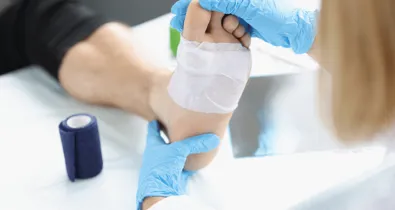
Diabetic Wound Management
An analysis of the disease process, focusing on prevention strategies, limb salvage, and the unique requirements of diabetic patients.
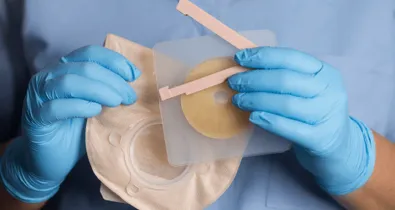
Ostomy Management
A complete focus on the treatment, therapy, and counseling for individuals during every stage of a fecal or urinary diversion.

Certified Wound Care Marketing Specialist
Looking to increase your organization’s revenue potential, enhance your customer base, and become more competitive?