Folliculitis: Causes, Treatment, & Dressings
Overview, Classification, Causes, Treatment, and Dressing Options — Including Peristomal Folliculitis
Published on November 24, 2026. Reviewed by Becky Strilko
Folliculitis is inflammation of one or more hair follicles, most often caused by bacterial infection but sometimes fungal, viral, or purely mechanical in origin. It presents as small, follicle-centered papules or pustules, frequently with an erythematous rim, and can occur anywhere hair grows — including the skin surrounding a fecal or urinary stoma.
Peristomal folliculitis deserves special attention from wound and ostomy clinicians because it is a recognized form of peristomal medical adhesive-related skin injury (PMARSI), and because its usual triggers — shaving, repeated adhesive removal, and occlusion under a pouching system — are built into routine ostomy care. Left unaddressed, it can compromise pouch adherence and lead to a self-perpetuating cycle of pouch leakage and skin breakdown. Our Ostomy Management Specialist course builds the peristomal skin assessment and pouching skills needed to prevent and manage this along with other peristomal complications.
Key takeaways
- Folliculitis is inflammation of the hair follicle and is classified by depth (superficial vs. deep) and by cause (bacterial, fungal, viral, or mechanical/chemical). Staphylococcus aureus is the most common cause of bacterial folliculitis.
- Peristomal folliculitis is a recognized peristomal skin complication. WOCN’s assessment guide includes folliculitis among PMARSI sources when adhesive-related trauma occurs.
- Around the stoma, folliculitis is driven mainly by improper hair removal (shaving instead of trimming), hair pulling, trauma during skin barrier removal, friction, moisture, and occlusion beneath the pouching system.
- Management depends on the cause and severity and should address any mechanical triggers like hair removal technique and adhesive removal practices to prevent recurrence. Antibiotics may be appropriate for bacterial folliculitis but are not required for every case.
- Left untreated, superficial bacterial folliculitis can progress to furuncles (boils) or carbuncles, and around a stoma it can compromise the pouch seal, causing leakage that further damages the peristomal skin.
- Peristomal skin care and pouching adjustments focus on gentle cleansing, correct hair management, atraumatic adhesive removal, and a well-fitting pouching system. Infected, persistent, or recurrent cases require clinician assessment and treatment tailored to the underlying cause.
Wound overview: what is folliculitis?
Folliculitis is a very common inflammatory disorder in which the hair follicle becomes infected or irritated, producing follicle-centered papules and pustules, typically on an erythematous base. It can be pruritic, tender, or mildly painful, and lesions are frequently accompanied by damaged or easily removed hairs within the affected follicle.
The condition is most often infectious, with Staphylococcus aureus responsible for the majority of bacterial cases, though Pseudomonas aeruginosa (“hot tub folliculitis”), dermatophyte or Malassezia fungi, herpesviruses, and Demodex mites can also cause it. Non-infectious folliculitis can result from ingrown hairs after shaving (pseudofolliculitis barbae), occlusion, certain medications (including EGFR inhibitors and long-term corticosteroids), and mechanical or chemical irritation.
Around a stoma, folliculitis is classified within the PMARSI (Peristomal Medical Adhesive-Related Skin Injury) category, alongside skin stripping, because it is so frequently precipitated by adhesive removal and hair-management practices tied to the pouching system rather than by infection alone. However, not every case of peristomal folliculitis is adhesive-related.
Classifying folliculitis
Folliculitis is classified along two complementary axes: depth of follicular involvement, and underlying cause. Both influence treatment selection.
By depth
| Type | Involvement | Typical presentation |
| Superficial folliculitis | Limited to the upper follicle/ostium | Small, itchy or mildly tender pustules or papules on an erythematous base. |
| Deep folliculitis | Involves deeper portions of the follicle and may extend into the surrounding tissue | More painful, may form nodules or boils (furuncles); increased risk of scarring and permanent hair loss if untreated. |
By cause
| Subtype | Cause | Distinguishing features |
| Bacterial | Staphylococcus aureus is most common; other bacteria possible | Follicle-centered pustules or red papules. Culture may help identify the organism. |
| Gram-negative | Sometimes following prolonged antibiotic treatment for acne | Worsening or new pustules often around nose, lip, chin or cheeks, despite standard acne antibiotic treatment; consider in refractory cases. |
| Hot tub (Pseudomonas) | Pseudomonas aeruginosa contaminated water | Onset 6 hours – 5 days after exposure; affects areas covered by a swimsuit; often self-limited. |
| Fungal | Dermatophytes, Malassezia, or Candida | Itchy, often worsened by sweat; more common with diabetes, corticosteroid use, or antibiotic therapy; antibacterial antibiotics are not effective against fungal causes. |
| Mechanical / pseudofolliculitis | Friction or traumatic adhesive removal/ingrown hairs from shaving or plucking | Follicular papules or pustule formation; recurs with the same hair-removal or adhesive technique. |
| Eosinophilic | Non-infectious, can be associated with HIV/AIDS or immunosuppression | Intensely pruritic papules or pustules; may not respond to antibiotics; may improve with topical steroids or antiretroviral therapy (HIV-associated disease). |
Peristomal folliculitis: recognizing it around a stoma
Peristomal folliculitis appears as small red papules or pustules clustered around hair follicles within the skin under and around the pouching system's skin barrier. Patients often describe tingling, itching, or a stinging/burning sensation, and may notice the pattern correlates with where hair is present or where the wafer edge repeatedly contacts the skin.
- Location pattern: lesions cluster in hair-bearing peristomal skin, frequently at the wafer edge, in areas where hair has been shaved rather than trimmed, or where hair is being exposed to adhesive trauma.
- Appearance: discrete follicular pustules or red bumps, sometimes progressing to broken skin, small erosions, or crusting if scratched or repeatedly re-traumatized by pouch changes.
- Correlation with care technique: Hair or skin barrier removal technique may suggest follicular trauma; however, effluent or ostomy product contact may suggest irritant or contact dermatitis.
Because peristomal skin complications overlap in appearance, always compare against the pattern: irritant contact dermatitis mirrors the shape of leaked effluent, allergic contact dermatitis mirrors the exact contact zone of a product, and folliculitis clusters specifically at hair follicles — an important distinction when selecting an intervention.
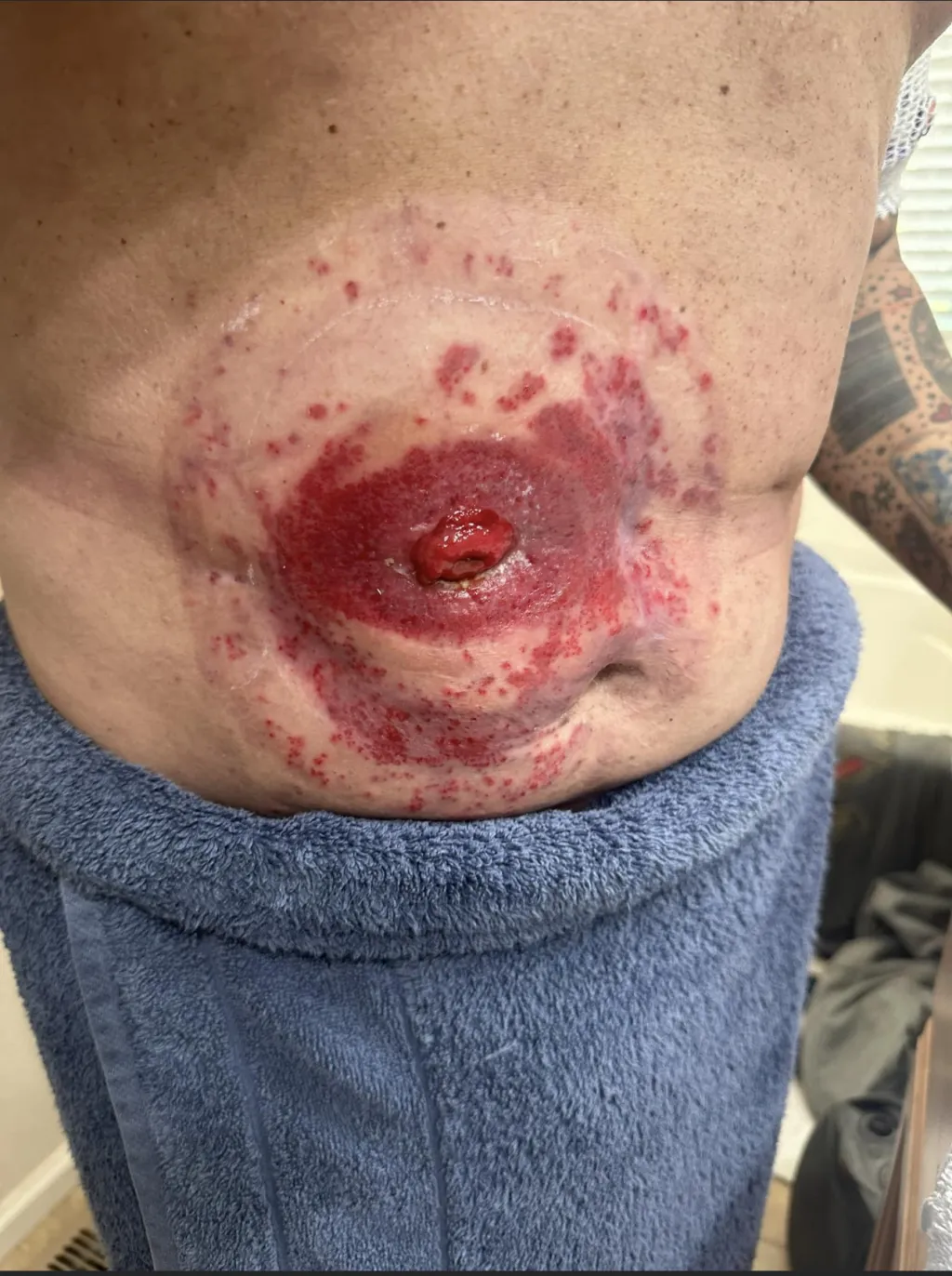
What does folliculitis look like?
Breaking down the wound
This picture shows extensive peristomal inflammation surrounding the stoma, along with both individual and clustered areas of red papules that extend beyond the main inflamed area of skin but within the outline of the pouching system. Shiny and possibly eroded skin areas close to the stoma. Clinical assessment should evaluate prolonged moisture exposure, leakage, and product irritation, pouch fit, and whether individual lesions are follicle-centered versus satellite lesions which are more indicative of a fungal infection. Redness alone does not establish folliculitis. Compromised skin can impair pouch adhesion, allowing further leakage and injury.
Common causes and risk factors
General folliculitis
- Skin barrier disruption: shaving (especially against the grain), waxing, friction from tight clothing, or scratching opens the follicle to bacterial entry.
- Occlusion and moisture: heat, sweating, and occlusive dressings or clothing create conditions favorable to bacterial or fungal overgrowth.
- Immunosuppression and comorbidities: diabetes, corticosteroids or long-term antibiotic use, and immunosuppressive therapy all increase risk.
- Environmental exposure: poorly chlorinated hot tubs/pools (Pseudomonas) and shared razors or towels (autoinoculation).
Peristomal-specific causes
- Improper hair removal: shaving the peristomal area (rather than trimming with scissors) is a leading, preventable cause — razors nick and irritate follicles and predispose to ingrown hairs and bacterial entry.
- Adhesive removal technique: pulling the wafer off quickly or removing it in the direction of hair growth without adequate support of the skin can pluck or traumatize hairs and their follicles.
- Occlusion under the pouching system: the skin barrier traps heat, moisture, and perspiration against hair-bearing skin for extended wear times, an ideal environment for follicular inflammation.
- Infrequent or delayed pouch changes: prolonging wear time beyond what the skin and adhesive can tolerate increases both occlusion time and the mechanical trauma of eventual removal.
- Excess body hair and skin folds: more hair-bearing surface area in contact with adhesive increases risk; skin folds compound occlusion and friction.
Treatment strategies
Treatment depends on the underlying cause, severity, and extent of folliculitis.
General folliculitis
- Mild/superficial cases: For bacterial folliculitis, a topical antibacterial wash or a topical antibiotic such as mupirocin or clindamycin may be appropriate; many cases are self-limited and resolve within days to weeks with basic self-care such as gentle cleansing, good hygiene, and avoidance of irritation to the hair follicle.
- Moderate to severe or widespread cases: oral antibiotics may be warranted that target Staphylococcus aureus (e.g., cephalexin, doxycycline, or clindamycin), typically for a short course (around 5–10 days), with escalation to MRSA coverage (TMP-SMX, doxycycline, clindamycin) if risk factors are present.
- Fungal folliculitis: treated with topical or oral antifungals rather than antibiotics, which are not effective and may worsen fungal overgrowth.
- Recurrent folliculitis: bacterial culture to guide therapy, plus decolonization strategies such as intranasal mupirocin and chlorhexidine body washes when recurrence suggests S. aureus carriage.
- Larger boils or carbuncles: may require incision and drainage by a clinician in addition to antibiotics.
Peristomal folliculitis — targeted interventions
- Correct the hair-removal technique: trim longer peristomal hairs with scissors or use a small electrical trimmer. Use of straight razors should be avoided to prevent skin irritation or accidental trauma to the stoma.
- Adjust adhesive removal technique: support the skin with one hand while slowly and gently peeling the wafer away with the other, working in the direction of hair growth; use an ostomy-compatible adhesive remover wipe for wafers that are difficult to release rather than pulling.
- Cleanse gently: wash the peristomal skin with plain water or a mild, pH-appropriate cleanser at each skin barrier change; avoid harsh scrubbing, which can traumatize inflamed follicles further. If a cleanser is needed, rinse and dry the skin thoroughly and make sure there is no adhesion-interfering residue remaining.
- Topical antimicrobial therapy: Topical treatment may be appropriate for suspected or confirmed bacterial folliculitis. Choose a formulation compatible with the pouching system.
- Escalate for worsening or persistent pustules or suspected Staph/fungal infection: Clinician-directed oral antibiotics or antifungal/anti-inflammatory powder may be warranted per culture results when pustules or spreading involvement are present.
- Review pouch-change frequency: Individualize barrier change frequency. Change before leakage or skin barrier failure occurs, while avoiding any unnecessary removal. Review skin barrier fit and removal technique.
Implications of not treating folliculitis
Most superficial folliculitis is self-limited, but ignoring persistent, spreading, or peristomal folliculitis carries real risk:
- Progression to furuncles (boils) or carbuncles: untreated superficial folliculitis can extend into deeper tissue, forming painful abscesses that may require incision and drainage.
- Cellulitis and systemic spread: in rare cases, especially in immunocompromised patients, infection can spread into surrounding tissue or, uncommonly, into the bloodstream.
- Permanent scarring and hair loss: deep or recurrent folliculitis can scar the follicle, resulting in permanent alopecia in the affected area.
- Compromised pouch seal (peristomal-specific): inflamed, eroded, or crusted peristomal skin makes it difficult for the adhesive barrier to seal properly, which can lead to leakage — which could cause additional irritant dermatitis and a self-perpetuating cycle of skin breakdown.
- Increased pouch-change frequency and cost: leakage from a poor seal may require more frequent skin barrier changes, increasing ostomy supply cost. Repeated adhesive removal can worsen existing folliculitis.
- Reduced quality of life: peristomal discomfort, unpredictable leakage, and visible skin changes can significantly affect an ostomate's confidence and daily activities.
Dressing and pouching options for folliculitis
For classic folliculitis elsewhere on the body, “dressing” usually means topical therapy and protective covering rather than an absorptive wound dressing. For peristomal folliculitis, management instead centers on adjusting the pouching system and adjunct skin-care products.
| Presentation | Management options | Primary purpose |
| Mild superficial folliculitis (non-peristomal) | Antibacterial wash Topical antibiotics (mupirocin, clindamycin) Warm compress for comfort | Control local bacterial burden and reduce inflammation. |
| Moderate/severe or widespread folliculitis | Oral antibiotics per culture/sensitivity Warm compresses to promote drainage of larger lesions | Treat deeper or extensive infection and prevent progression to furuncles/carbuncles. |
| Peristomal folliculitis, mild | Gentle cleansing with water Topical antibiotic (pouching-compatible) Correct hair trimming and adhesive-removal technique | Resolve follicular inflammation while preserving pouch adhesion. |
| Peristomal folliculitis with broken/weepy skin | Crusting procedure with skin barrier powder and No-sting liquid barrier film before reapplying wafer Barrier rings/strips to fill uneven or irregular contours | Protect compromised skin and restore an effective pouch seal. |
| Peristomal folliculitis, recurrent or pustular | Clinician-directed oral or topical antimicrobial Referral to a WOC/ostomy nurse for pouching system review | Address possible Staph/fungal involvement and correct underlying fit or technique issues. |
Across all peristomal cases, a properly fitted, well-sealing pouching system is foundational — convex systems, ostomy belts, and correctly sized barrier openings reduce the friction, leakage, and occlusion that most often trigger and perpetuate folliculitis.
When to escalate care
- Pustules that are spreading, increasing in size, or forming a boil/carbuncle.
- Fever, chills, or malaise accompanying skin findings.
- Peristomal folliculitis is interfering with pouch adherence or causing recurrent leakage.
- No improvement after one to two weeks of appropriate self-care or topical therapy.
- Recurrent folliculitis despite corrected hair removal and adhesive technique, warranting culture and possible decolonization.
- Any peristomal skin change accompanied by increasing pain, spreading redness, or purulent, foul-smelling drainage.
Frequently asked questions
Is folliculitis contagious?
Bacterial and fungal folliculitis can spread through shared razors, towels, or direct skin contact, and autoinoculation to other body areas is possible through scratching or shaving. Good hygiene and avoiding sharing personal items reduce this risk.
Can folliculitis be prevented around a stoma?
Yes — most peristomal folliculitis is preventable. Trimming (rather than shaving) peristomal hair, using a gentle and supported adhesive removal technique, ensuring a well-fitting pouching system, and not extending wear time beyond what the skin tolerates are the most effective prevention strategies.
How is folliculitis different from acne?
Both can present as inflammatory papules and pustules, but folliculitis is inflammation centered on hair follicles and caused primarily by infection or mechanical/chemical irritation, while acne vulgaris involves the hair follicle and its associated oil gland resulting from pilosebaceous unit occlusion and Cutibacterium acnes proliferation. Blackheads and whiteheads are characteristic of acne, and the distinction matters because treatment approaches differ.
Should peristomal hair be removed at all?
Hair does not need to be fully removed, but excess hair in the skin barrier contact zone is often trimmed flush to the skin with scissors or a small electrical trimmer to improve barrier adhesion and reduce the risk of hair pulling on adhesive removal. Shaving with a straight razor is generally discouraged for peristomal skin.
References
- PathologyOutlines.com. “Folliculitis.” pathologyoutlines.com
- Mayo Clinic. “Folliculitis – Symptoms and causes.” mayoclinic.org
- Mayo Clinic. “Folliculitis – Diagnosis and treatment.” mayoclinic.org
- Merck Manual Professional Edition. “Folliculitis.” merckmanuals.com
- BMJ Best Practice. “Folliculitis – Symptoms, diagnosis and treatment.” bestpractice.bmj.com
- Johns Hopkins Medicine. “Folliculitis, Boils and Carbuncles.” hopkinsmedicine.org
- MedicineNet. “What Happens if Folliculitis Goes Untreated?” medicinenet.com
- WOCN Society. “Peristomal Skin Complications: Clinical Resource Guide.” cdn.ymaws.com PDF
- WOCN Society. “Peristomal Skin Assessment Guide for Clinicians.” psag.wocn.org
- Day Dechant E. “Common Peristomal Skin Complications: How to Prevent and Manage.” WoundSource. 2023. woundsource.com
- Alvey B, Beck DE. “Peristomal Dermatology.” Clin Colon Rectal Surg. 2008. PMC2780183
- DermNet. “Skin problems from stomas.” dermnetnz.org